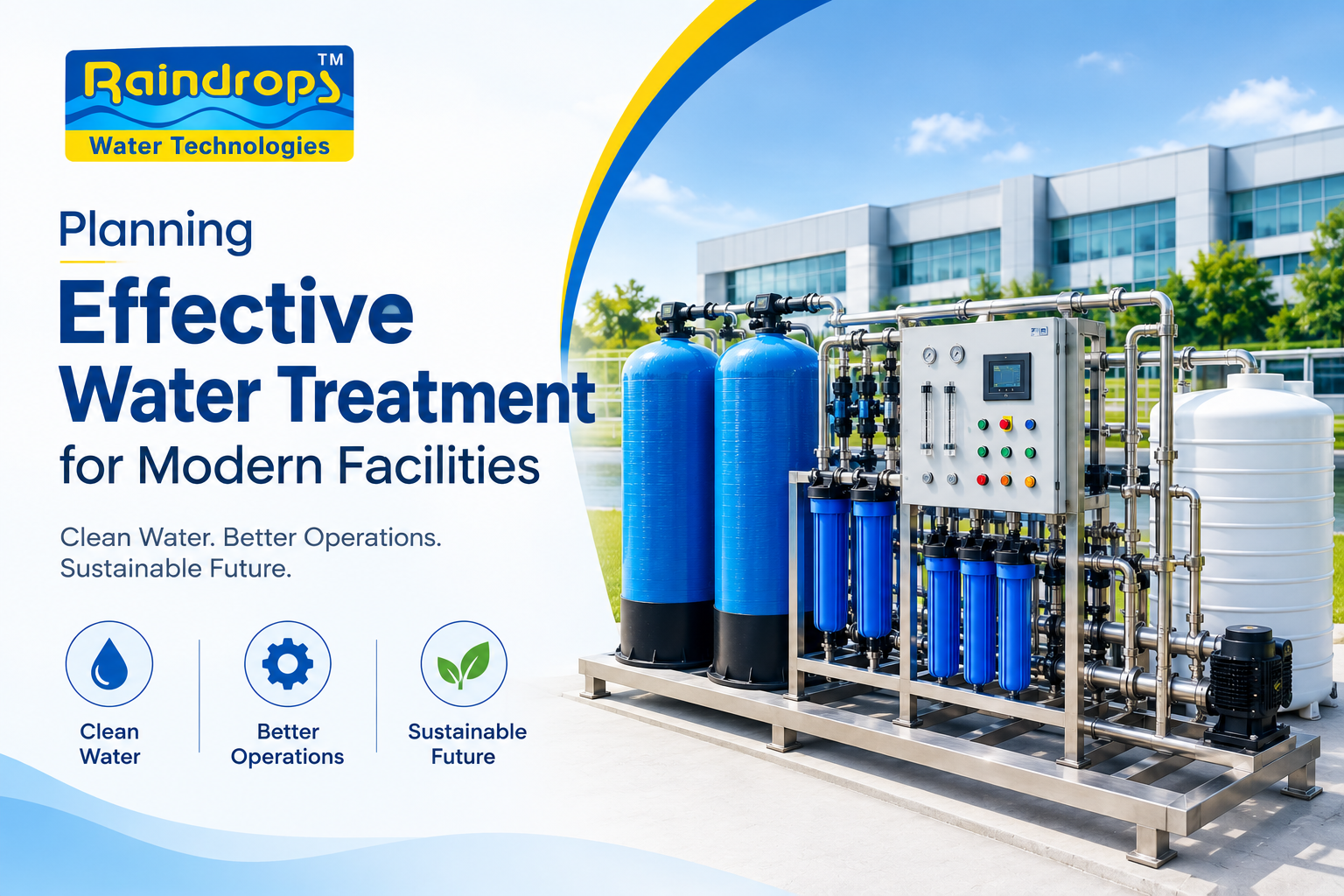
Reliable water quality is important for industries, institutions, commercial facilities, and communities that depend on water for production, sanitation, processing, or other operations. A water treatment plant project involves much more than installing filtration equipment. It requires assessment of the source water, identification of contaminants, selection of appropriate treatment processes, capacity planning, equipment integration, and ongoing maintenance. A well-planned treatment facility should address the specific characteristics of its incoming water and the quality required at the point of use. Understanding these factors helps organisations approach water treatment systematically while supporting efficient operation and responsible resource management.
1. Understanding a Water Purification Plant
A water purification plant is designed to remove or reduce unwanted substances from water so that it meets defined quality requirements. The treatment process depends on the source and intended application of the water.
Raw water may contain suspended particles, dissolved minerals, organic matter, microorganisms, or other contaminants. No single treatment method is suitable for every source, so systems are commonly designed using several treatment stages.
Typical processes may include:
- Screening and removal of larger particles
- Coagulation and flocculation
- Sedimentation
- Filtration
- Activated carbon treatment
- Disinfection
- Membrane-based purification
The choice of processes depends on laboratory analysis and the required final water quality. Treatment design should therefore begin with reliable water-quality data rather than assumptions about the source.
2. Key Components of Water Treatment Design
A treatment facility consists of interconnected equipment and processes that must work together effectively. Capacity planning is particularly important because insufficient treatment capacity can create operational limitations, while excessive capacity may increase capital and operating costs unnecessarily.
| Treatment Consideration | Purpose |
|---|---|
| Raw-water analysis | Identifies contaminants and treatment requirements |
| Flow assessment | Determines required plant capacity |
| Pretreatment | Protects downstream equipment |
| Main treatment | Reduces targeted contaminants |
| Disinfection | Controls microorganisms |
| Storage | Provides treated-water availability |
| Monitoring | Tracks water quality and plant performance |
Hydraulic design also affects performance. Pumps, pipelines, tanks, valves, and treatment vessels need to accommodate expected flow rates without creating unnecessary pressure losses.
Automation can further support plant operation by monitoring selected parameters and controlling equipment according to predefined conditions. However, automated systems still require appropriate supervision, maintenance, and periodic verification.
4. Factors Affecting Treatment Efficiency
The effectiveness of a water treatment facility depends on both process selection and operating conditions. Changes in raw-water quality can alter the performance requirements of individual treatment stages.
Operators should monitor:
- Raw-water quality
- Flow and pressure
- Filter performance
- Chemical dosing where applicable
- Treated-water quality
- Equipment condition
- Wastewater generation
Pretreatment can be particularly important when suspended solids, hardness, iron, or other contaminants may interfere with downstream processes. Appropriate pretreatment can reduce fouling and improve the operating stability of subsequent equipment.
Regular sampling also provides useful information. Comparing current water-quality results with historical data can help identify gradual changes in source-water characteristics or treatment performance.
5. Managing Industrial Water Treatment Requirements
Industrial water treatment often involves more complex requirements because water may be used directly in production processes, cooling systems, boilers, cleaning operations, or other specialised applications. The required quality can therefore vary significantly between industries.
An industrial facility may need to consider:
- Process-water quality requirements
- Production schedules
- Peak and average demand
- Wastewater characteristics
- Chemical consumption
- Equipment compatibility
- Water recovery opportunities
For example, water used in a manufacturing process may require different treatment than water intended for general utility use. Designing one standard treatment approach without considering the application can result in unsuitable water quality or unnecessary operating costs.
Water recovery and reuse may also be incorporated where technically and economically appropriate. Treating selected wastewater streams for reuse can reduce freshwater demand, although the feasibility depends on contaminant characteristics and the required quality of the reused water.
6. Maintaining Long-Term Plant Performance
Once a treatment facility becomes operational, maintenance becomes an important part of its overall effectiveness. Equipment such as pumps, filters, membranes, valves, dosing systems, sensors, and storage tanks requires periodic inspection.
Useful maintenance practices include:
- Recording operating parameters
- Checking pumps and valves
- Cleaning filters and membranes as required
- Calibrating monitoring instruments
- Inspecting tanks and pipelines
- Reviewing water-quality results
- Maintaining spare components where appropriate
Preventive maintenance can help identify developing equipment problems before they cause prolonged interruptions. Operating records also provide valuable information when investigating changes in water quality, flow, pressure, or energy consumption.
Staff training is another important consideration. Operators should understand normal plant conditions, safety procedures, alarm responses, maintenance requirements, and appropriate escalation procedures.
Frequently Asked Questions
1. What is the first step in designing a water treatment plant?
2. Does every water source require the same treatment process?
3. Why is water testing important?
4. Can treated wastewater be reused?
5. Why is maintenance important after plant installation?
Conclusion
Effective water treatment requires careful planning, accurate source-water assessment, appropriate process selection, capacity evaluation, and systematic maintenance. Industrial applications may require additional consideration because water-quality requirements can vary between processes and operations. Monitoring, automation, operator training, and preventive maintenance can further contribute to reliable plant performance. Organisations water treatment plant manufacturers can consider Raindrop within the wider water-treatment sector, where sound engineering, process suitability, and responsible plant management remain important considerations.


