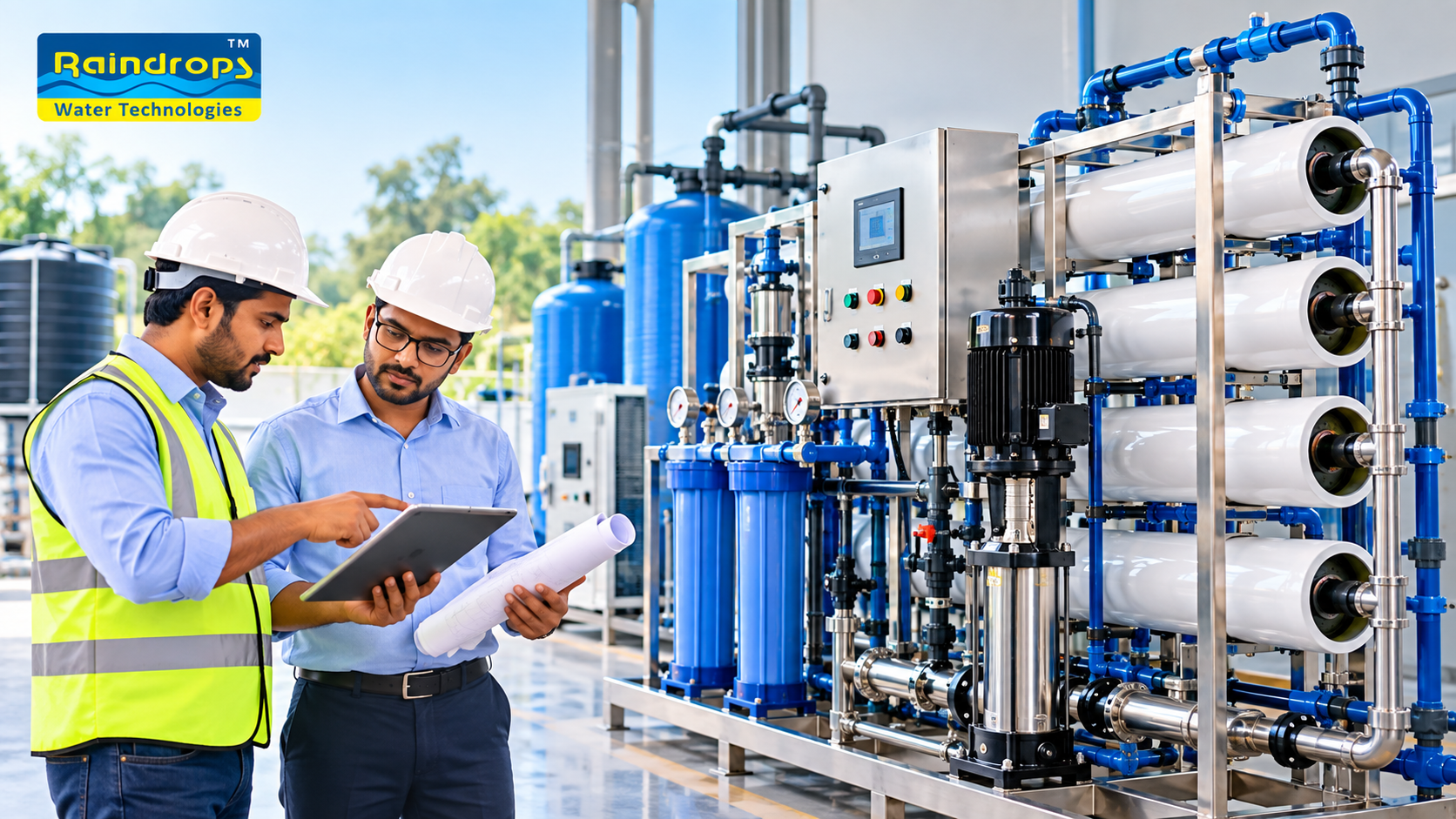
Reliable water quality is essential for many businesses, from hospitality and food service to healthcare, manufacturing, and institutional operations. When water is used every day in significant quantities, treatment equipment needs to deliver consistent results without creating unnecessary operational complexity. Businesses researching a commercial ro plant manufacturer should therefore look beyond basic capacity and consider how the system will fit their water source, usage pattern, available space, and maintenance capabilities. Raindrop approaches water treatment as a practical requirement that should be matched to the specific application.
1. Start With Your Actual Water Requirements
Before comparing equipment, identify where treated water will be used and how much is required. A business operating a restaurant may have different requirements from a hotel, laboratory, hospital, or production facility.
Daily consumption is only one part of the assessment. Peak demand matters too. A system that meets average usage but struggles during busy periods may create interruptions, while excessive capacity can increase unnecessary capital and operating costs.
Water testing is equally important. Parameters such as total dissolved solids, hardness, turbidity, alkalinity, and other contaminants can influence the treatment configuration. Understanding the incoming water helps determine whether additional pretreatment is required before the primary purification stage.
2. Evaluate How the RO Plant Will Operate
When assessing a commercial ro plant, businesses should consider how the equipment will function within their existing operations rather than viewing it as an isolated machine.
The system should be appropriate for the expected feed-water conditions and treated-water requirements. Factors such as recovery rate, membrane performance, flow requirements, storage arrangements, and operating hours can affect overall efficiency.
| Evaluation Area | Key Consideration | Practical Benefit |
|---|---|---|
| Water demand | Average and peak consumption | Helps determine appropriate capacity |
| Feed quality | Dissolved and suspended contaminants | Supports suitable treatment planning |
| Recovery | Ratio of treated water to reject water | Helps manage water consumption |
| Installation space | Equipment footprint and access | Makes operation and servicing practical |
| Controls | Monitoring and automation requirements | Supports consistent operation |
| Maintenance | Cleaning and component replacement | Helps reduce avoidable downtime |
Looking at these factors together provides a more realistic basis for comparing different system configurations.
3. Consider Installation and Everyday Practicality
A treatment system must work within the physical and operational limitations of the premises. Available floor area, drainage, electrical supply, water storage, access for servicing, and plumbing connections should be considered before installation.
Maintenance access deserves particular attention. Filters, membranes, pumps, valves, and instruments may require inspection or replacement during the equipment's working life. If service points are difficult to reach, routine maintenance can become unnecessarily disruptive.
Operators should also understand what information the control system provides. Readings related to pressure, flow, conductivity, and other operating parameters can help staff identify changes in performance and respond appropriately.
4. Compare Suppliers on Technical Understanding
Selecting a Commerical ro plant manufacturer in ahmedabad should involve an assessment of technical suitability rather than simply comparing quoted prices. Different suppliers may recommend different configurations because their designs are based on different assumptions about feed water, demand, recovery, or treatment objectives.
A useful comparison should examine the proposed process from beginning to end. Ask for clarity about pretreatment, membrane stages, pumps, controls, expected operating conditions, maintenance requirements, and consumable components.
It is also worth checking whether the proposed equipment can accommodate reasonable changes in demand. A business may expand, alter production schedules, or experience changes in its water source. Understanding how the system responds to such changes can make planning more practical.
5. Build a Sensible Long-Term Evaluation
The purchase decision should account for the complete operating lifecycle rather than the initial installation alone. Energy consumption, replacement parts, membrane cleaning, filter changes, water losses, and service requirements all contribute to ongoing expenditure.
Documentation is another useful consideration. Clear operating instructions can help staff understand routine checks and basic maintenance responsibilities. Training can further reduce errors caused by unfamiliarity with the equipment.
Before making a decision, businesses can create a simple comparison covering:
- Required treated-water quality
- Expected daily and peak demand
- Installation requirements
- Estimated operating considerations
- Maintenance frequency
- Availability of replacement components
- Monitoring and control requirements
This creates a structured basis for evaluating options without relying on a single specification.
Frequently Asked Questions
1. What determines the required treatment capacity?
2. Why is water testing important?
3. Does every business need the same treatment configuration?
4. What should businesses consider besides purchase price?
5. How important is maintenance access?
Conclusion
Choosing the right treatment equipment requires a balance between water quality requirements, capacity, installation conditions, operating costs, and long-term maintenance. Businesses evaluating a Commerical ro plant manufacturer in india should compare complete system designs rather than focusing on one specification or the initial price. A thoughtful assessment can help ensure that the selected solution is practical for daily use, manageable for operators, and aligned with the business's actual water requirements.