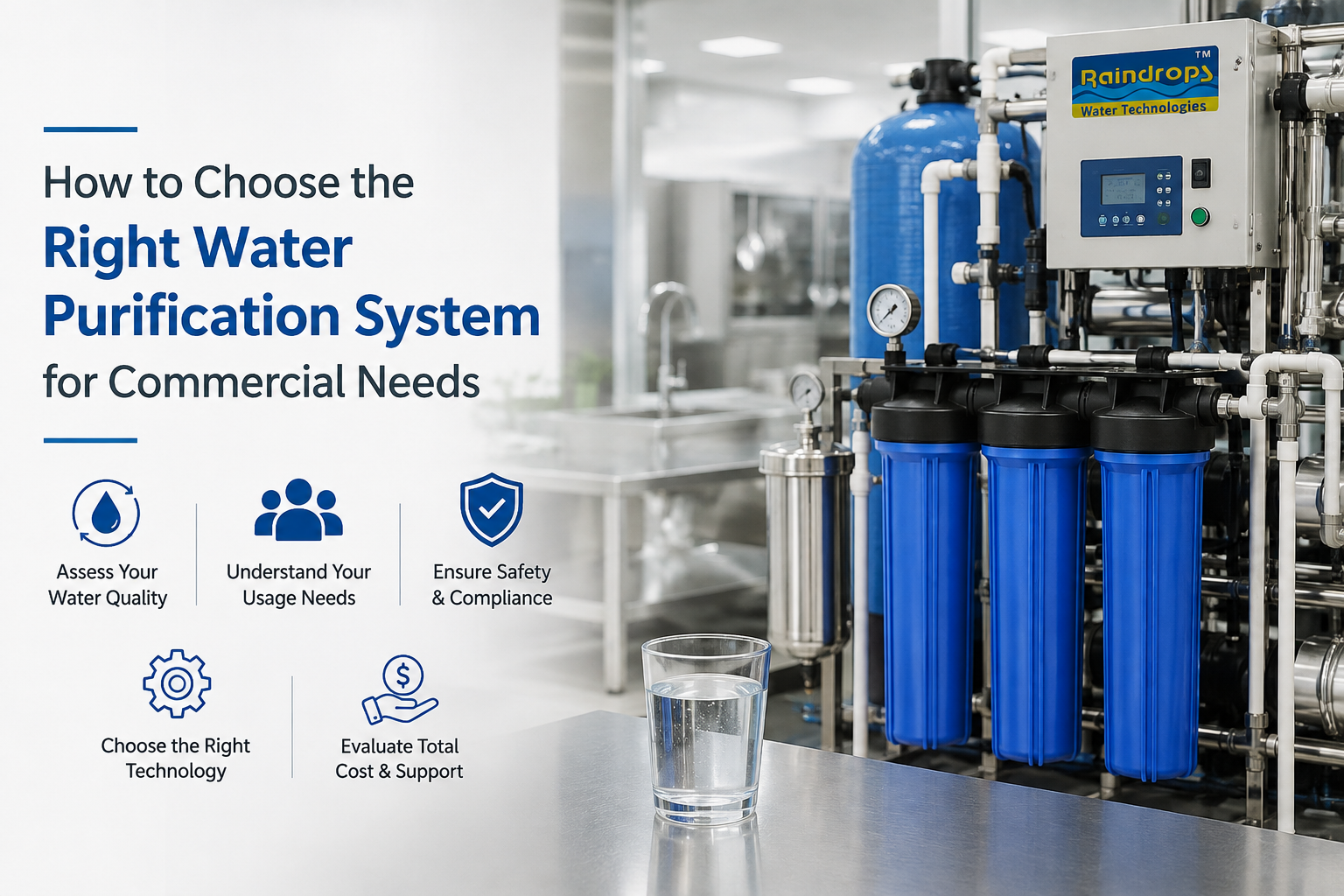
Reliable water treatment is essential for businesses that depend on consistent water quality for daily operations. A commercial ro plant manufacturer works with purification systems designed to reduce dissolved salts, impurities, and other unwanted substances from water through reverse osmosis technology. Selecting an appropriate system requires attention to factors such as source-water quality, required output, operating conditions, maintenance, and expected usage. A properly planned purification setup can support dependable water availability while helping organisations manage water treatment requirements efficiently. Understanding how these systems work and what influences their selection can help businesses make informed decisions for different commercial applications.
1. Understanding Industrial RO Plant Requirements
An industrial ro plant manufacturer focuses on systems designed to handle larger and more demanding water treatment requirements. Industrial applications can involve substantially higher water consumption than smaller commercial facilities, making capacity and operational continuity important considerations.
Before selecting a system, businesses can evaluate:
- Daily water requirement
- Source-water characteristics
- Required treatment capacity
- Desired water quality
- Available installation area
- Electricity and water availability
- Maintenance requirements
The quality of incoming water has a direct influence on system design. Water containing high levels of dissolved solids, hardness, suspended particles, or other contaminants may require appropriate pretreatment before reaching the reverse osmosis membranes.
Understanding these conditions before installation can help reduce operational difficulties and improve the suitability of the treatment process.
2. How Reverse Osmosis Supports Water Treatment
Reverse osmosis uses pressure to move water through a semipermeable membrane. The membrane allows water molecules to pass while restricting many dissolved substances and contaminants. The process produces treated water and a separate concentrated stream containing rejected impurities.
The effectiveness of a reverse osmosis system depends on several interconnected components.
| Component | Primary Purpose |
|---|---|
| Feed pump | Provides pressure required for the treatment process |
| Pretreatment | Reduces contaminants that could affect membranes |
| RO membrane | Separates water from many dissolved impurities |
| Storage tank | Holds treated water for later use |
| Control system | Monitors and manages system operation |
| Post-treatment | Adjusts treated water according to application needs |
Pretreatment is particularly important because membranes can be affected by scaling, fouling, suspended particles, and certain chemical contaminants. Depending on the source water, pretreatment may include filtration, softening, activated carbon treatment, or other processes.
4. Factors That Influence Plant Performance
Water treatment performance is influenced by both equipment design and operating conditions. Even a technically suitable system may perform poorly if it is incorrectly operated or maintained.
Businesses should monitor:
- Feed-water pressure
- Membrane performance
- Water recovery
- Treated-water quality
- Cleaning requirements
- Energy consumption
- Reject-water generation
Membrane fouling can gradually reduce water production and increase pressure requirements. Regular monitoring can help identify changes before they become significant operational problems.
Water recovery is another important consideration. It represents the proportion of feed water converted into treated water. The appropriate recovery level depends on source-water chemistry, membrane characteristics, pretreatment, and system design.
5. Selecting a Commercial RO Plant
A commercial ro plant can be used in applications where businesses require treated water for regular operations. Restaurants, hotels, institutions, healthcare facilities, offices, food-related operations, and other commercial establishments may have different water-quality and capacity requirements.
The selection process should begin with a clear assessment of actual demand rather than choosing equipment solely on nominal capacity.
Useful considerations include:
- Average daily consumption
- Peak-period demand
- Raw-water quality
- Required treated-water specifications
- Available floor space
- Storage requirements
- Expected operating schedule
Storage capacity can be useful when water demand fluctuates throughout the day. A properly sized storage arrangement can allow treatment to occur according to the system's operating schedule while providing water when consumption temporarily increases.
The location of the treatment plant should also allow adequate access for inspection, cleaning, membrane replacement, and other maintenance activities.
6. Maintaining Water Treatment Efficiency
Regular maintenance is essential for keeping a reverse osmosis system operating effectively. Filters, membranes, pumps, valves, instruments, and storage components require attention according to operating conditions and equipment recommendations.
Routine management may include:
- Monitoring treated-water quality
- Checking pressure readings
- Inspecting filters
- Cleaning membranes when required
- Checking pumps and valves
- Maintaining accurate operating records
Membrane cleaning should be based on performance indicators and suitable procedures rather than carried out unnecessarily. Keeping records of pressure, flow, conductivity, and cleaning activities can help operators identify gradual changes in system performance.
Safe operation is equally important. Electrical components, pressurised equipment, chemical dosing systems, and water storage arrangements should be handled according to appropriate safety procedures.
Choosing the right RO Plant Solutions for Reliable Water Purification is essential for maintaining consistent water quality, improving filtration efficiency, and supporting long-term plant performance. From commercial facilities to industrial applications, the right RO system can help businesses achieve dependable purification while reducing operational challenges. Explore our RO plant solutions to understand the technologies, configurations, and support available for your water treatment requirements.
Frequently Asked Questions
1. What does a reverse osmosis plant do?
2. Why is pretreatment important?
3. How is RO plant capacity selected?
4. How often should RO membranes be cleaned?
5. Why should treated-water quality be monitored?
Conclusion
Effective water purification depends on appropriate system design, accurate assessment of source-water conditions, suitable pretreatment, proper membrane operation, and regular maintenance. Businesses should consider their actual consumption patterns and water-quality requirements before selecting treatment equipment. Monitoring performance indicators can further support efficient operation and help identify maintenance needs early. For organisations assessing industrial ro plant solutions, Raindrop can be considered within the wider water-treatment sector, where careful planning and responsible system management remain important for dependable purification.


