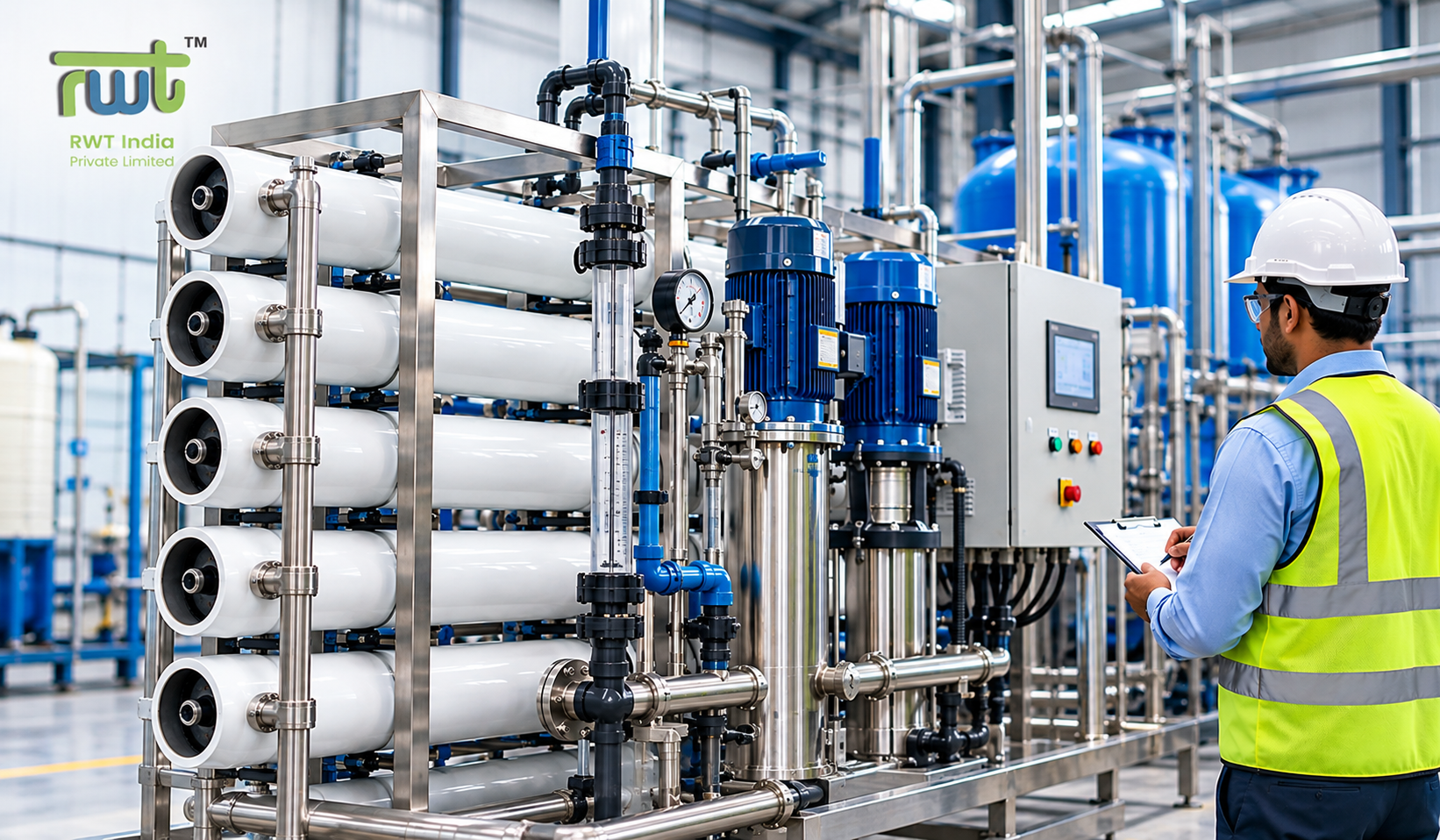
Industrial facilities need a dependable supply of treated water for manufacturing, cleaning, cooling, and other process requirements. Yet inconsistent feedwater quality, rising operating costs, and excessive reject water can make treatment systems difficult to manage. Choosing an appropriate industrial ro plant manufacturer is one part of the solution, but long-term performance also depends on system design, maintenance, and how efficiently water is recovered. Raindrop provides water treatment solutions for industrial requirements, making it useful to understand the factors that influence performance before investing in a new system.
1. Why Industrial Water Treatment Needs a Process-Specific Approach
Water quality varies depending on its source. Borewell water may contain elevated dissolved salts, while municipal or surface water can present different challenges involving suspended particles, organic matter, and seasonal variation. A treatment system designed without evaluating these conditions may struggle to deliver consistent output.
Reverse osmosis (RO) uses a semipermeable membrane to separate many dissolved substances from water under pressure. However, the membrane is only one part of the treatment process. Effective performance begins with testing the incoming water and identifying the required output quality.
A suitable design considers:
- Feedwater analysis and seasonal changes
- Daily water demand and peak consumption
- Required permeate quality for the intended application
- Available installation space and utilities
- Applicable discharge and reuse requirements
This information helps determine pretreatment needs, membrane configuration, storage capacity, and operating pressure.
2. What to Evaluate Before Selecting a Supplier
Comparing suppliers requires more than looking at the rated capacity or initial purchase price. An industrial ro plant manufacturer in india should be assessed on its ability to understand the application and recommend equipment suited to the actual water conditions.
Technical documentation is particularly important. Ask for the proposed system capacity, expected recovery rate, feedwater assumptions, membrane specifications, and estimated operating requirements. These details make it easier to compare quotations on a consistent basis.
Consider the following factors before making a decision:
- Design suitability: The proposed system should reflect measured water quality and actual demand.
- Pretreatment arrangement: Filtration, softening, or other treatment stages may be necessary depending on feedwater characteristics.
- Controls and monitoring: Pressure gauges, flow meters, and conductivity monitoring help operators identify performance changes.
- Service support: Clarify maintenance schedules, spare-part availability, and the process for addressing breakdowns.
- Operating costs: Review electricity, cleaning chemicals, replacement membranes, and water disposal expenses.
A supplier's technical explanation should be clear enough for the operating team to understand the system's limitations as well as its capabilities.
3. How Pretreatment and Maintenance Protect Performance
RO membranes can become less effective when exposed to scale-forming minerals, suspended solids, or organic and biological deposits. Pretreatment reduces these risks and helps maintain stable operation. Its configuration should be based on feedwater analysis rather than a standard package applied to every site.
Maintenance is equally important. Operators should track feed pressure, differential pressure, permeate flow, recovery, and treated-water conductivity. Comparing these readings against established baseline values can reveal developing problems before production is significantly affected.
| Operating indicator | What a change may suggest | Practical response |
|---|---|---|
| Rising differential pressure | Fouling or restricted flow | Inspect pretreatment and filtration |
| Falling permeate flow | Fouling, scaling, or changed conditions | Review operating data and membrane condition |
| Increasing product-water conductivity | Membrane damage, leakage, or operating changes | Check water quality and system integrity |
| Unusual pressure or flow variation | Valve, pump, or feed-supply issues | Inspect equipment and operating conditions |
Cleaning should follow the membrane supplier's recommendations. Keeping accurate maintenance records also helps distinguish gradual performance decline from sudden equipment faults.
4. Improving Water Recovery Without Compromising Quality
Recovery describes the proportion of feedwater converted into usable permeate. Increasing recovery may reduce the volume of reject water, but pushing the system beyond suitable operating limits can increase scaling risk and membrane stress.
An industrial ro plant should therefore be evaluated on both water recovery and the quality of its output. The appropriate balance depends on feedwater chemistry, operating pressure, membrane design, and the concentration of dissolved substances in the reject stream.
Facilities can explore several practical improvements:
- Correcting pretreatment deficiencies that contribute to scaling or fouling
- Checking for leaks and unnecessary water use during operation
- Reusing suitable reject water for compatible non-product applications after assessing its quality
- Reviewing recovery settings with qualified treatment specialists
Reuse must be based on the intended application and relevant safety requirements. Reject water should not be redirected into a process simply because it is available.
5. Calculating the Real Cost of Ownership
The purchase price alone does not show whether a treatment system will be economical over its operating life. Electricity consumption, membrane replacement, cleaning, labour, downtime, and reject-water management can all affect total expenditure.
Before approval, estimate daily demand and operating hours, then compare expected consumption and maintenance costs across shortlisted designs. Confirm whether quoted performance depends on particular feedwater conditions. A system that performs well under different conditions from those at the facility may deliver disappointing results.
Frequently Asked Questions
1. How is the required RO capacity calculated?
2. Is pretreatment always necessary?
3. How often should RO membranes be cleaned?
4. Can RO reject water be reused?
Conclusion
Reliable industrial water treatment depends on matching system design to water quality, maintaining equipment carefully, and measuring performance beyond initial output. Before engaging an industrial ro plant manufacturer in ahmedabad, businesses should compare technical suitability, operating costs, maintenance support, and realistic recovery expectations. A well-evaluated system can help facilities manage water more consistently while avoiding preventable operating problems.