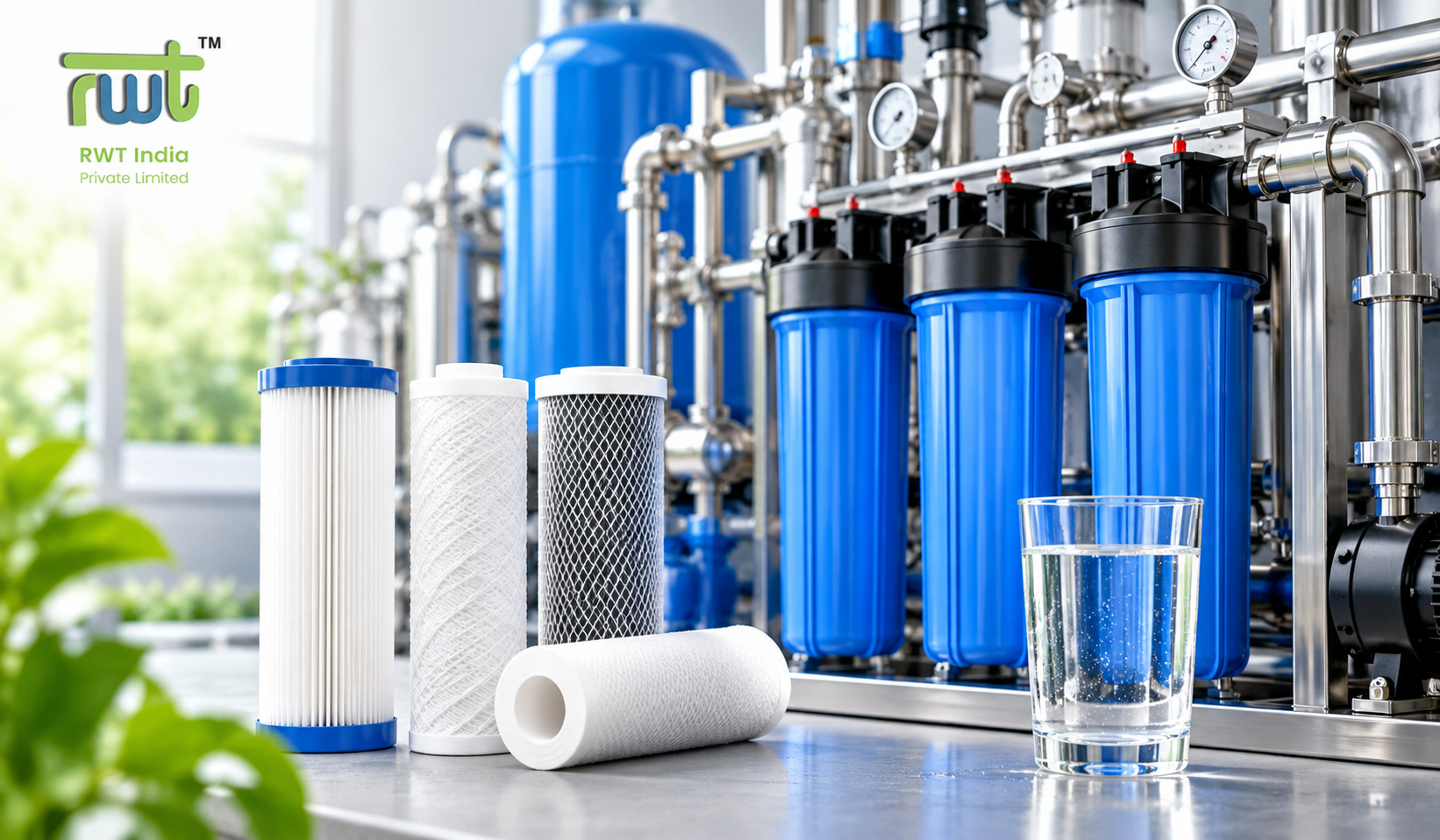
Water quality plays a critical role in manufacturing, commercial operations, and industrial processing. Even when water appears clear, suspended particles, sediment, and other impurities can affect equipment performance and downstream treatment processes. Selecting the right filtration system helps manage these risks while supporting consistent operations. For businesses evaluating filtration options, Raindrop provides a relevant starting point for understanding water treatment requirements, including the role of a micron cartridge filter in removing fine particulate matter from water streams.
1. Why Industrial Water Filtration Requires Careful Planning
Industrial water treatment is rarely a one-size-fits-all process. The appropriate filtration method depends on the source water, the type and concentration of contaminants, the required output quality, and the intended application.
Poorly matched filtration equipment may allow particles to pass through or become clogged too frequently, increasing maintenance needs and operating costs. Effective planning begins with a water quality assessment that identifies the size and nature of suspended solids.
Filtration can support several objectives, including protecting pumps and sensitive equipment, reducing particulate loads before advanced treatment, and improving the consistency of process water. However, conventional particle filters do not automatically remove dissolved salts, microorganisms, or chemicals. These contaminants may require additional treatment technologies depending on the application.
2. How Micron Ratings Influence Filtration Performance
A filter's micron rating indicates the particle size it is designed to retain under specified operating conditions. Smaller ratings generally target finer particles, but the actual performance depends on the filter media, construction, and whether the rating is nominal or absolute.
For example, a cartridge filter 5 micron may be suitable for applications that require the reduction of relatively fine suspended particles. Its suitability still depends on the incoming water quality and the acceptable level of particles downstream.
| Filtration consideration | What it means | Why it matters |
|---|---|---|
| Micron rating | Target particle size | Helps match filtration to water quality needs |
| Nominal or absolute rating | Expected particle retention performance | Clarifies how efficiently particles of a specified size are captured |
| Flow rate | Volume passing through the filter over time | Helps prevent restrictions during operation |
| Pressure drop | Difference in pressure across the filter | Indicates resistance and can help identify loading |
| Filter compatibility | Suitability for the water's chemistry and temperature | Supports reliable operation and material durability |
A finer rating is not always the best choice. Selecting a filter that is unnecessarily fine can increase pressure losses or require more frequent replacement. The goal is to balance particle removal, flow requirements, and maintenance expectations.
3. Where Cartridge Filtration Fits in a Treatment Process
Cartridge filtration often serves as a polishing stage or a protective barrier within a broader treatment system. It can be installed after processes such as sedimentation or media filtration to capture remaining suspended particles before water reaches sensitive equipment.
In some installations, cartridges protect reverse osmosis membranes from particulate fouling. They do not replace the pretreatment needed to manage scaling, dissolved contaminants, or biological growth.
The ideal configuration depends on the full treatment sequence. Engineers should consider the source water, required water quality, operating pressure, temperature, and anticipated contaminant load before specifying equipment. A Cartridge Filter Manufacturer in India may be evaluated on its ability to provide appropriate filtration options, clear technical specifications, and products compatible with the intended process.
4. Practical Steps for Selecting the Right Filter
Before choosing a cartridge filtration system, review the operating requirements rather than relying on micron rating alone. The following steps can make the selection process more precise:
- Test the incoming water: Determine suspended solids, turbidity, and other relevant water quality parameters.
- Define the required output: Establish the level of particulate removal needed for the next process or final application.
- Confirm system capacity: Match the filter's rated flow and pressure limits to actual operating conditions.
- Check material compatibility: Ensure the cartridge and housing are suitable for the water chemistry and operating temperature.
- Plan maintenance: Establish a replacement schedule based on pressure differential, water quality, and manufacturer guidance.
Monitoring pressure before and after the filter can help identify increasing resistance as particles accumulate. Replacement should follow the specified operating limits and maintenance procedures rather than waiting for a major decline in system performance.
Frequently Asked Questions
1. What does a micron rating tell you?
2. Is a finer filter always more effective?
3. Can cartridge filters remove dissolved salts?
4. How often should a cartridge be replaced?
4. Can cartridge filtration work with other treatment technologies?
Conclusion
Reliable filtration starts with understanding the water being treated and the performance the application requires. Micron rating, flow capacity, pressure drop, material compatibility, and maintenance planning all influence the final selection. Rather than choosing equipment based on a single specification, businesses should assess how the filter will function within the complete treatment process. Working with a technically capable Micron Cartridge Filter Manufacturer can help decision-makers evaluate suitable configurations and establish a filtration approach aligned with operational needs.